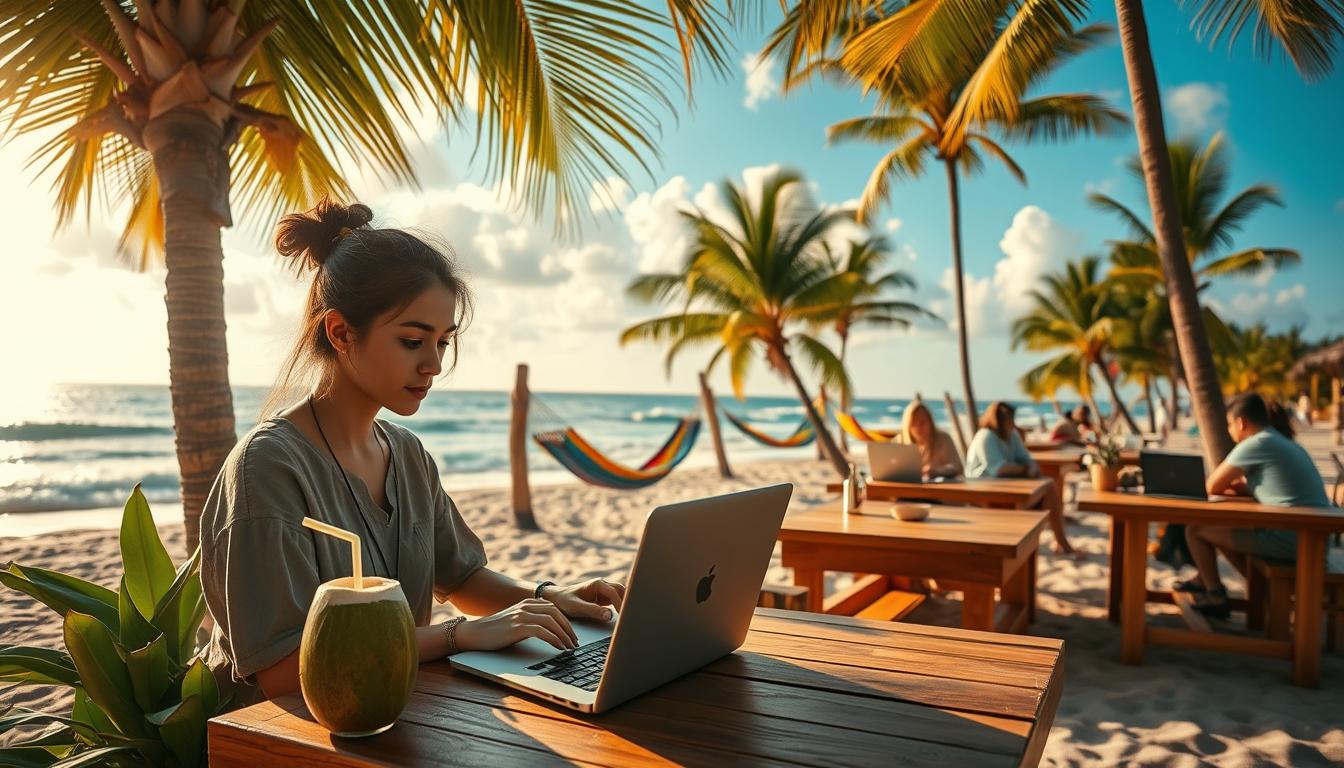
Imagine trading your office view for a beachfront cafe or a mountain co-working space. This freedom defines the modern remote work movement. Southeast Asia has become a top global hub for this exciting way of living and earning.
Thanks to digital tools and widespread internet, location-independent careers are more doable than ever. Industries now embrace remote teams. Across Southeast Asia, you’ll find professional coworking spaces in bustling cities and quiet towns.
This path isn’t one-size-fits-all. You can dive into full-time travel or try shorter “workations.” Many people balance months abroad with a home base. It requires planning, but the rewards are immense.
Our guide provides practical steps. We cover career preparation, smart budgeting, and finding great accommodation. You’ll learn about health, safety, and building a supportive community while working remotely.
Southeast Asia offers unique perks for beginners. The affordable cost of living stretches your budget. Robust digital infrastructure keeps you connected. Vibrant expat networks and rich cultures make settling in easier.
Before you pack your laptop, assess your personal and career goals. This journey is a major lifestyle shift. With the right information, you can make a confident, informed decision.
Key Takeaways
- Southeast Asia is a premier global destination for remote professionals due to its infrastructure and community.
- Modern technology and the rise of remote-friendly industries have made this work style highly accessible.
- You can customize your approach, from being a full-time traveler to taking extended work vacations.
- Success requires upfront planning in areas like finance, healthcare, and finding reliable workspaces.
- The region offers a low cost of living, which is ideal for those starting their location-independent career.
- Building connections with both local and expat communities is key to a fulfilling experience.
- Honestly evaluating your readiness is the crucial first step before making the leap.
Understanding the Digital Nomad Lifestyle
This path merges a professional career with global exploration. It’s built on a foundation of technology and personal freedom.
What is a Digital Nomad?
A digital nomad uses the internet to earn an income from any location. Their career and home are not fixed to one city or country.
They set up systems to fund travel while working. This differs from a regular remote employee who might just work from a house in their hometown.
| Aspect | Digital Nomad | Regular Remote Worker |
|---|---|---|
| Primary Goal | Integrate work with continuous travel | Perform job duties from a chosen location |
| Home Base | Often none; life is mobile | Maintains a permanent residence |
| Travel Pattern | Moves every few weeks or months | Travels occasionally for leisure |
Key Characteristics and Mindset
Successful individuals in this field share common traits. Adaptability and self-discipline are crucial for managing changing environments.
“The skill to thrive in uncertainty is your greatest asset on the road.”
They value experiences over owning things. This mindset requires comfort with autonomy and handling all logistics personally.
Some people move quickly, others stay for months. There is no single correct way to structure your journey.
Your personality and career needs shape your unique approach. Honest self-assessment is the first step to see if this life fits you.
Planning Your Remote Work Adventure in Southeast Asia
Southeast Asia stands out as a top choice for professionals seeking an affordable and vibrant base. Careful planning turns this opportunity into a sustainable reality.
Why Southeast Asia is a Prime Destination
Your money stretches much further here than in Western nations. This economic advantage is a major draw for the digital nomad community.
You can enjoy diverse landscapes, from beaches to mountains. Vibrant cultures and excellent food scenes add to the appeal.
Reliable internet and coworking spaces support your work. Welcoming expat communities help you settle in quickly.
Many accommodations offer discounts for longer stays. This makes slow travel a smart financial way to explore the world.
Setting Realistic Travel Goals
First, decide your travel pace. Are you suited for fast moves or slow, immersive stays? Your budget and career needs will guide this choice.
Consider starting with a “workation” of a few weeks. This tests your adaptability without a long-term commitment.
Be honest about what you value most. Strategic choices align destinations with your personal and professional goals.
| Country | Avg. Monthly Cost | Key Feature | Visa Ease |
|---|---|---|---|
| Thailand | $1,000 – $1,500 | Strong digital infrastructure | Tourist visa easy |
| Vietnam | $700 – $1,200 | Very low cost of living | E-visa available |
| Indonesia | $800 – $1,400 | Island diversity | Visa on arrival |
This table helps you pick the right place for your budget and work needs. It saves time and money in the long run.
Every nomad has a unique path. Define yours clearly from the start.
Preparing for a Beginner’s Remote Work Journey
Many professionals overlook the importance of a solid income plan before going abroad. Your ability to work remotely is the cornerstone of this entire adventure.
Assessing Your Career and Remote Work Options
Start by evaluating your current job. Could it be done from anywhere? Some companies are surprisingly flexible if you present a strong case.
Prepare a proposal showing how remote work benefits your employer. Highlight your reliability and how you’ll meet deadlines across time zones.
If a transition isn’t possible, explore new jobs. Major sites like LinkedIn and Indeed have many remote listings. Specialized boards offer curated opportunities.
| Platform | Primary Focus | Key Feature |
|---|---|---|
| General Professional Network | Vast global job board | |
| FlexJobs | Curated Remote & Flexible Jobs | Pre-screened, scam-free listings |
| WeWorkRemotely | Tech & Startup Roles | High-quality tech opportunities |
| Upwork | Freelance Marketplace | Build a profile and bid on projects |
Freelancing or contract work provides great flexibility. These paths let people define their own schedule and income.
Stable earnings reduce stress while living abroad. Fields like programming, writing, and online teaching are ideal for a digital nomad.
Audit your skills honestly. Identify any gaps that need training. This preparation saves time and builds confidence for your journey.
Budgeting and Cost of Living Considerations
Controlling your budget abroad requires a shift from short-term vacation spending to long-term living strategies. This mindset is key to making your adventure sustainable.
Estimating Expenses While Living Abroad
Your main costs are accommodation, food, transport, and workspace. Long-term travel often costs less than a traditional lifestyle in expensive cities.
Choosing the right place makes a huge difference. Countries like Vietnam and Thailand offer excellent value. Your money goes much further here.
| Expense | Thailand (Avg.) | Vietnam (Avg.) |
|---|---|---|
| Monthly Rent | $300 – $600 | $250 – $500 |
| Food (per day) | $10 – $20 | $8 – $15 |
| Coworking Space | $100 – $200 | $80 – $150 |
Creative Money Saving Strategies
Book accommodations for several months to get major discounts. Cooking some meals saves a lot of money compared to eating out daily.
Use local buses and trains instead of taxis. One remote professional eliminated $2,600 in monthly apartment rent. They redirected 40% of their salary into savings.
Experts recommend saving at least six months of living costs before you go. This safety net covers emergencies and unexpected events.
Essential Remote Work Tools and Technology
Without the right tools, even the most scenic workspace becomes a frustration. Your ability to earn an income depends entirely on reliable technology and connectivity. This section covers the non-negotiable gear and software for professional success abroad.
Laptop, WiFi, and Connectivity Solutions
Your laptop is your mobile office. Choose one with strong battery life and processing power for video calls. This is the most important thing you will pack.
Fast wifi is the lifeline for a digital nomad. Always research internet quality before booking a place. Check reviews on sites like Booking.com for comments on wifi speed.
“A mobile hotspot saved my workday when the hotel internet died before a client call.”
Use tools like Speedtest.net to check speeds upon arrival. Have a backup plan like a KeepGo global hotspot or a local SIM card. This prevents a single point of failure.
| Remote Task | Minimum Speed | Notes |
|---|---|---|
| Video Calls (Zoom) | 3 Mbps upload/download | Stable connection is key |
| Large File Uploads | 10 Mbps upload | Faster is better |
| General Browsing | 5 Mbps download | Fine for emails and research |
Apps and Digital Tools for Productivity
Organize your work with apps like ClickUp for projects and Slack for team chat. Tools like Zoom keep you connected across time zones.
Noise-cancelling headphones are essential for cafes. Carry a universal power adapter and portable charger. These small items make a big difference every day.
Keep digital copies of passports and visas in a secure cloud service. Download them to your phone for offline access. This prepares you for any situation where wifi isn’t available.
Navigating Housing and Coworking Options
Your choice of where to live and work directly impacts your daily productivity and overall experience abroad. Strategic planning for your accommodation and workspace conserves funds and reduces stress.
Begin your housing search on platforms like Booking.com or Airbnb, focusing on monthly discounts to lower your rent. Many people also join local Facebook groups for remote workers, which frequently share deals on apartments and coliving spaces.
Always verify the WiFi speed before committing to a lease. Request a speed test result from the host or scrutinize recent guest reviews for internet comments.
Remaining in one place for several months frequently reduces costs by 30% or more. This makes long-term living abroad remarkably budget-friendly.
Finding Affordable Accommodation
Specialized coliving companies like Outsite design spaces specifically for mobile professionals. They combine housing and workspace into one convenient package.
Selecting the Right Coworking Space
A dedicated office significantly improves focus over hotel rooms or cafes. These spaces provide reliable internet, air conditioning, and other essential amenities.
They also foster connections with other nomad professionals. Building a local community is crucial for networking and reducing isolation.
Pricing varies dramatically by location. Some spaces offer passes for a few days for maximum flexibility. Compare options using this table:
| City | Daily Rate | Monthly Rate | Key Amenities |
|---|---|---|---|
| Bangkok, Thailand | $8 – $12 | $100 – $150 | High-speed WiFi, meeting rooms, free coffee |
| Ho Chi Minh City, Vietnam | $5 – $8 | $80 – $120 | Air conditioning, printing, events |
| Canggu, Bali | $10 – $15 | $120 – $200 | Swimming pool, onsite cafe, dedicated desks |
Select a place that aligns with your work style and financial plan. The right environment boosts both output and personal satisfaction.
Managing Health, Safety, and Insurance on the Road
Navigating healthcare and personal security is a non-negotiable part of planning your journey. A single medical issue abroad can create major financial stress without the right safeguards in place.
Your peace of mind depends on solid preparation. This means securing the right coverage and understanding local conditions.
Travel-Friendly Health Insurance Tips
First, check if your current employer’s health insurance covers you internationally. Many standard plans have limited or no overseas benefits.
If not, you need a dedicated travel policy. Look for coverage that includes emergency medical care, evacuation services, and support for adventure activities.
| Provider | Key Feature | Ideal For |
|---|---|---|
| SafetyWing | Monthly subscription, global coverage | Long-term remote professionals |
| World Nomads | Comprehensive adventure activity cover | Active travelers |
| Allianz | Wide network of hospitals, trip cancellation | Those wanting brand recognition |
Staying Safe While Embracing Adventure
Research your destination’s specific safety landscape before you arrive. Understand local laws and customs to avoid unintended issues.
Keep digital copies of your passport, visa, and insurance policy on your phone for offline access. Use a secure cloud service as a backup.
Maintaining your health on the road requires routine. Prioritize sleep, balanced meals, and regular exercise to stay resilient in a new country.
Establishing a Sustainable Work Routine
Establishing a productive daily rhythm is the true test of a successful remote professional abroad. The beach and endless adventures call, while vacationers explore every day. Saying no a lot can feel draining.
You must take charge of your time, work, and fun. This prevents guilt and burnout. A clear routine is your anchor.
Overcoming Distractions and Maintaining Focus
Your environment matters. Living with other remote professionals helps a lot. They understand your need to work every day.
This creates a supportive space, not a constant party. It turns a lonely struggle into a shared lifestyle.

Set firm boundaries for your day. Use early mornings for deep focus before it gets hot. Apps can block distracting websites during work hours.
An accountability partner checks on your progress. This keeps you honest when motivation dips.
| Strategy | Daily Discipline | Work-Sprint Model |
|---|---|---|
| Core Approach | Fixed daily hours, consistent output | Intense work for 2-3 weeks, then travel |
| Best For | Client meetings, routine tasks | Project-based work, deep creative tasks |
| Travel Freedom | Weekends and evenings | Extended breaks to explore regions |
The work-sprint model is powerful. Many nomads prefer it. You grind on projects, then pack a daypack for real adventure.
You keep your home base paid. This balances things perfectly. It frames your time abroad as a professional lifestyle, not a permanent vacation.
Balancing Work, Travel, and Community Building
While work and travel are exciting, a strong support network is what truly makes this journey sustainable and fulfilling. Loneliness is a real challenge when you’re far from home. Actively building your community is just as important as managing your wifi.
Creating a Supportive Digital Nomad Network
Start by joining online groups. Facebook has many for remote professionals. Global groups offer tips, while local ones help you meet people in your city.
Organized trips are another great way. Companies plan retreats and coliving experiences. You instantly connect with like-minded friends.
Stay in social hostels or coliving spaces. Use their common areas to meet others. Shared meals and activities create bonds quickly.
Don’t forget friends and family back home. Schedule regular video calls. Show up for big events online when you can’t be there.
Join a local gym or take a class. Hobbies like yoga or language lessons help you meet locals. This expands your community beyond other travelers.
| Method | Best For | Key Benefit |
|---|---|---|
| Facebook Groups | Quick local info & meetups | Free, immediate access |
| Organized Trips (e.g., WiFi Tribe) | Structured socializing | Curated community from day one |
| Coliving Spaces | Longer-term connections | Blends housing and social life |
Be proactive about your social life. Making friends takes effort, especially when you’re busy. It’s worth it for your happiness on the road.
Tackling the Pros and Cons of Nomadic Living
Choosing a location-independent career requires a clear-eyed look at its rewards and hurdles. This honest assessment helps you decide if this path fits your personality and goals.
Identifying Challenges and Risks
Isolation can be a real issue. You might miss birthdays and holidays back home. Staying focused on work with new adventures outside your door is tough.
Constant logistics drain mental energy. Figuring out housing and transport every few weeks is exhausting. Income can be unstable, especially for freelancers.
Navigating taxes and healthcare abroad adds complexity. These are significant cons to consider seriously.
Weighing the Advantages of Flexibility
The freedom to choose your office view is powerful. You can ski in the Alps one month and work from a beach the next.
This exciting way of living lets you travel extensively while earning. Slow travel saves money with long-stay discounts and local eats.
Rich cultural experiences promote personal growth. For the right person, these pros outweigh the challenges.
Transitioning from a Traditional Job to Remote Work
The journey to securing remote work begins with evaluating your current employment situation and exploring new avenues. A stable location-independent income is the foundation for a sustainable mobile career.
You have two primary paths. First, you can negotiate with your current employer. Many companies are more flexible than you think.
Prepare a solid business case. Show how remote work benefits your productivity and the company’s goals. Propose a trial period to prove it works.
Steps to Secure a Remote-Friendly Career
If a new role is better, search effectively. Use general sites like LinkedIn and Indeed. Also check specialized boards for true remote jobs.
Evaluate listings carefully. Ensure they offer full location freedom, not just hybrid arrangements. This is the only way to support your travel plans.
Freelancing or contract work is another great way. Platforms like Upwork let you build a schedule. This path offers maximum control over your time.
| Approach | Key Action | Success Tip |
|---|---|---|
| Internal Transition | Research policy & draft proposal | Focus on results, not hours logged |
| New Remote Job | Filter for “100% remote” roles | Highlight self-management skills |
| Freelance/Business | Build portfolio & client base | Start before leaving your current job |
Skills like writing, coding, and digital marketing are in high demand. Acquiring these capabilities opens many doors for people.
Give yourself a realistic timeline. Establish income and save an emergency fund first. This careful way reduces risk as you make the change.
Conclusion
Ultimately, choosing to work remotely from Southeast Asia is less about escaping reality and more about creating a new one tailored to your values. This path offers incredible freedom and adventure, but it isn’t for everyone.
Honest self-assessment is crucial. You must consider your comfort with uncertainty and ability to self-manage. There’s no single correct way to structure this exciting chapter of your life.
View your journey as an experiment. Start with research and perhaps a short trial. For a balanced look at what to expect, explore the pros and cons of a digital nomad.
Then take that first step. Whether it’s talking to your employer or booking a one-way ticket, begin designing your own unique experience abroad.